


 05th Aug, 2026
The Real Cost of Skipping Regular Car Detailing in Calgary
Your car has a tougher commute than you do. Between Deerfoot gravel kicking up at highway speed, months of winter de-icing salt soaking into every seam, and summer UV rays hitting harder at altitude, Calgary vehicles age faster than almost anywhere else in the country.
Most owners still think of detailing as a nice-to-have – something you book before selling the car or showing it off. That mindset is expensive.
Skipping professional car detailing in Calgary doesn’t just leave your car looking tired. It quietly accelerates depreciation, compromises interior hygiene, and sets the stage for structural paint damage that costs thousands to reverse.
Here’s what’s actually happening while you wait and what it’s costing you.
Section 1: The Invisible Damage – What Happens When You Wait
Exterior Paint & Body Degradation
• Salt & Slush Corrosion:
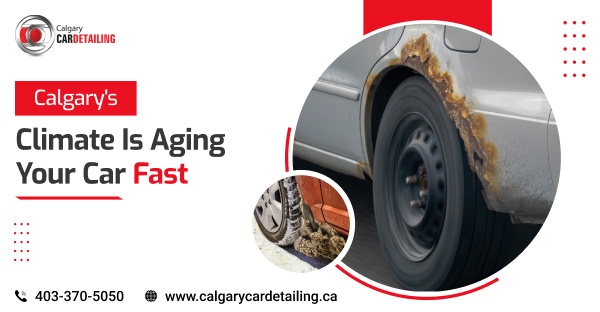
Winter road treatments aren’t just messy; they’re chemically aggressive. Once salt finds a micro-crack in your clear coat, it starts working on the bare metal underneath. And this is common for every car that travels daily on Calgary roads. Wheel wells and door seals are ground zero. By the time you see surface rust, corrosion has usually been active for months.
• Gravel Micro-fractures:
Deerfoot, Stoney, and every gravel-treated residential street in winter send small rocks into your paint at speed. Each impact creates a micro-fracture in the clear coat. On their own, they’re cosmetic. But when left untreated, they let moisture in. This is when clear-coat peeling starts.
• UV Rays & Oxidation:
Calgary sits roughly a kilometre above sea level. This altitude means Calgary gets more UV exposure than lower-elevation cities. Combine that with long, cloudless prairie summers, and unprotected paint oxidizes fast. They turn glossy finishes dull and chalky within a couple of seasons.
Learn why your car interior fades even when you park in the shade.
Interior Deterioration
• Salt Crusts & Carpet Fibers:
The salt that gets tracked in on boots doesn’t stay on the surface. It works into carpet backing and floorboards, breaking down fibers and creating a crust that’s nearly impossible to remove once it sets in.
• Leather Cracking:
Calgary’s temperature swings are brutal on natural leather. Freezing mornings and sun-baked afternoons dry the material out from both directions, leading to rigidity and eventually splitting at the seams.
• Bacterial & odor buildup:
Spilled coffee, wet boots, and trapped winter moisture combine to make your cabin air system an ideal breeding ground for mildew. Once odor sets into upholstery and vents, it’s a much bigger job than a quick wipe-down. It’s one of the first things a prospective buyer notices when they sit in the driver’s seat.
None of this damage announces itself right away. And this is exactly why it gets ignored. Most car owners only notice it when the repair bill or the trade-in appraisal makes it impossible to ignore any longer.
Section 2: Comparing Your Care Options – Solutions, Pros & Cons
Option A: Automated Drive-Through Car Washes
Pros:
• Fast,
• Inexpensive,
• Easy to find on every commute.
Cons:
• Friction brushes drag grit across your paint, causing heavy swirl marks.
• Recycled wash water deposits mineral spots.
• Automated systems can’t reach hidden salt packed under fenders and wheel wells.
Option B: DIY Driveway Cleaning
Pros:
• Full control over products,
• Lower immediate cost.
Cons:
• Realistically off the table for months during a Calgary winter.
• Many municipal bylaws restrict driveway runoff into storm drains.
• Without hot-water extraction and pH-balanced chemicals, you’re not actually removing embedded salt or road film – just moving it around.
Option C: Professional In-Shop Detailing (The Complete Solution)
Pros:
• Deep decontamination through iron removers and clay bar treatments that pull embedded contaminants out of the clear coat.
• Protective barriers like PPF and ceramic coating that actually stand up to gravel and salt.
• Professional-grade steam extraction that reaches the interior deterioration DIY methods miss.
Cons:
• Higher upfront cost and requires scheduling shop drop-off time.
Of the three, only professional detailing addresses the root causes rather than just the surface symptoms. It’s the difference between managing damage after it happens and preventing it from starting in the first place. Over a few winters, that difference shows up clearly in both appearance and resale value.
Section 3: The Economic Math – Maintenance Expense vs. Asset Protection
3-Year Neglect Strategy | Scheduled Detailing Plan | |
Annual cost | $0–$100 (occasional drive-through washes) | $400–$800 |
Paint condition at year 3 | Oxidized, chipped, early rust spots | Protected, glossy, minimal wear |
Interior condition | Stained, odorous, cracked leather | Preserved, clean, supple |
Likely repair needed | Full re-spray ($1,500+), interior detailing/reupholstery | None |
Trade-in impact | Appraisers deduct for visible wear | Full or near-full value retained |
Key Economic Drivers
• Preventing Re-Sprays: A routine paint sealant or ceramic coating costs a fraction of a $1,500+ body shop repaint. It also prevents the damage that leads to one.
• Maximizing Trade-In Value: Dealership appraisers actively penalize bad interiors and clear-coat oxidation during valuation. It’s one of the fastest ways to lose real dollars at trade-in.
• Extending Vehicle Lifespan: Mechanical cleanliness and cabin comfort aren’t just cosmetic. They are a part of what keeps a car feeling worth driving instead of worth replacing.
Add it up over a typical Calgary ownership period, and the math tilts hard in one direction. A neglected vehicle doesn’t just look worse – it costs more to fix, sells for less, and gets replaced sooner than it should have to be.
Explore the car care mistakes that damage your vehicle without you realizing.
Protect Your Investment with Calgary Car Detailing
Calgary’s climate doesn’t give your vehicle a break, so your maintenance plan shouldn’t either. Preventative care, including regular washes, protective coatings, and thorough interior cleaning, costs far less than reactive repairs like re-sprays, rust remediation, or interior reupholstery. The math isn’t close.
If you’re ready to stop the invisible damage before it becomes an expensive problem, explore routine detailing, PPF, or ceramic coating packages with Calgary Car Detailing and protect your asset today.