


 28th May, 2026
Can 3M Paint Protection Film Be Removed Without Damage?
3M Paint Protection Film is built to protect your paint from the kind of damage Calgary drivers see all year long: road salt, loose gravel, and highway chips. The real question is simple. When the film reaches the end of its life, can it come off cleanly, or will it take the clear coat with it?
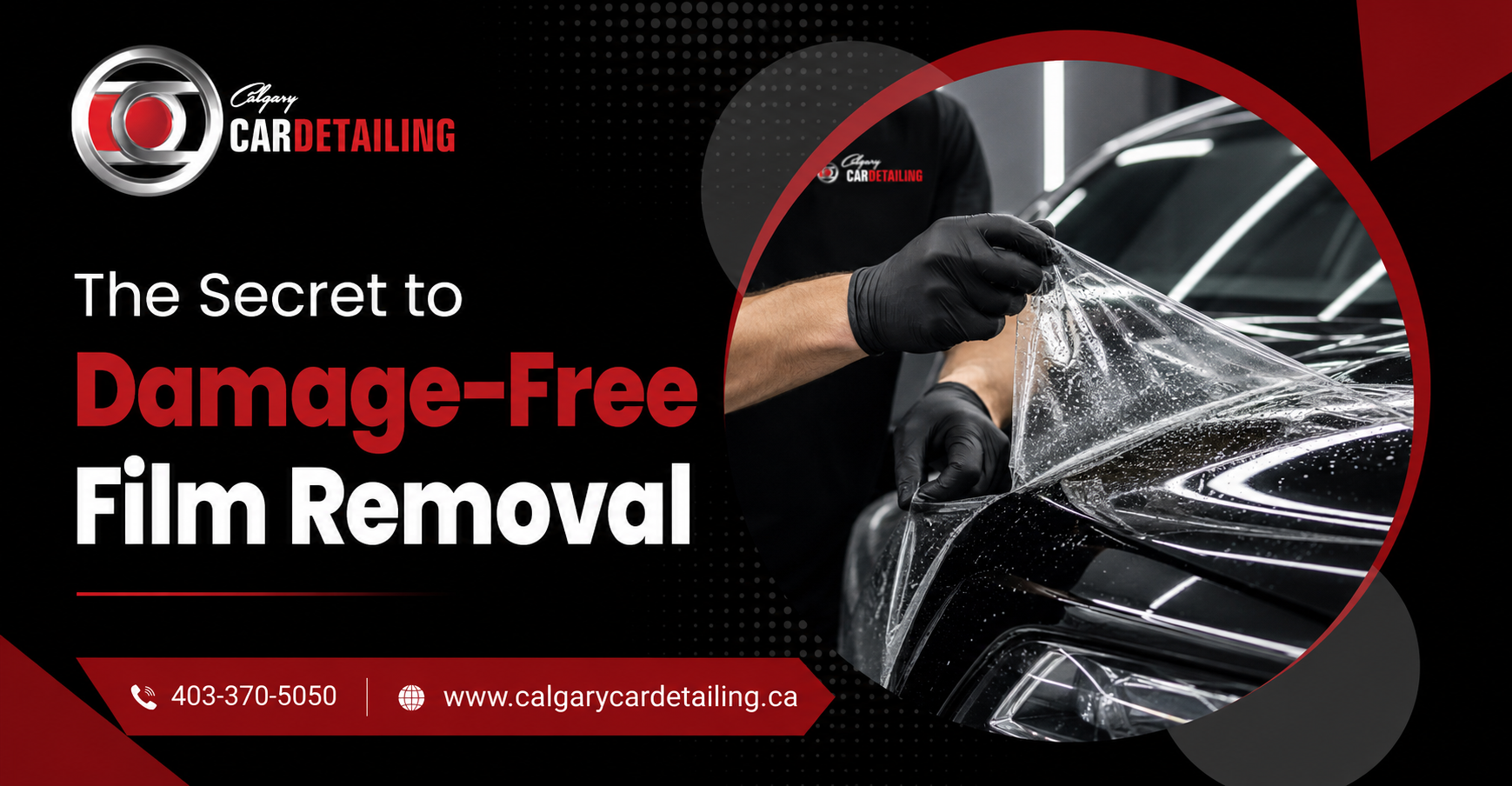
The answer is yes, it can be removed without damage when the job is done with the right heat, the right angle, and the right tools. This is why careful removal matters just as much as good installation, especially for owners who want to protect resale value and keep the finish looking original.
At Calgary Car Detailing, this is the kind of work that calls for patience, not force. A clean removal protects the paint underneath and helps avoid the kind of repair bill no driver wants.
The Science Behind 3M Paint Protection Film Adhesion
The film uses a pressure-sensitive adhesive that is designed to bond firmly to painted surfaces while still allowing later removal. 3M’s own guidance says the film is intended to be permanent, but it can be removed without damage to the finish when handled properly. In other words, the bond is strong on purpose. It needs to hold up against daily driving, debris, and weather, yet still release cleanly when the time comes.
Time changes that bond. Years of sun, cold snaps, road grime, and repeated washing can make the film feel tighter and less flexible. Calgary weather makes that even more relevant. The city sees road salt, gravel, weather exposure, and UV wear, all of which can shorten the useful life of exterior protection. This does not mean removal becomes dangerous, but it does mean the job needs more care than a fresh install.
Paint condition matters too. Original factory paint usually gives the safest result because it tends to be more stable than a weak or poorly repaired respray. Repainted panels, old bodywork, and areas with prior damage deserve a closer look before anyone starts peeling.
Discover more things you must know before getting a 3M Paint Protection Film.
The Top 3 Risks of DIY PPF Removal
Cold, rushed removal is where most problems begin. A film that must come off in one piece may break apart, leave residue behind, or stress the clear coat if it is pulled the wrong way. This is why garage-floor removal in winter often creates more work than it saves.
Adhesive Cleavage (The “Sticky Mess” Problem)
If the film is pulled too hard or too cold, the adhesive can separate unevenly from the backing. When that happens, glue stays on the panel instead of coming off with the film. The result is a thick, stubborn residue that spreads across the surface and turns a simple removal into a long cleanup job.
Clear Coat Peeling (Delamination)
A fast yank creates vertical stress on the paint. This stress is risky on weak clear coat, old repairs, or panels that were not painted properly. The film must be released in a controlled way. If it does not, the clear coat can lift with it. This is rare on healthy factory paint, but the risk rises when the surface underneath is already compromised.
Surface Scratches from Implements
People often reach for plastic razor blades, rough cloths, or harsh cleaners to deal with leftover glue. This usually makes things worse. Scraping can leave fine scratches, and strong solvents can dull or cloud the finish. Once the paint is marred, the ‘easy removal’ becomes a correction job.
How Professionals Ensure a Damage-Free Removal Process
A proper removal happens in a controlled bay, not in freezing wind. Warm conditions keep the film more flexible and reduce tearing. This matters because cold film gets brittle and splits into small pieces instead of lifting in a clean sheet.
Controlled Environment
A temperature-controlled shop gives the technician better control over the film and the adhesive underneath. The goal is to soften the material evenly, not to shock one spot with too much heat and leave another spot stiff. This steady approach lowers the chance of residue, tearing, and paint stress.
Precision Heat Application
Steam is often the safer choice. It delivers warm, even heat and helps loosen both the film and the adhesive. 3M’s removal guidance supports using a steamer or a heat gun to aid removal. Steam also gives the technician more control than a harsh blast from a dry heat gun.
The Correct Pulling Angle
The film must be pulled back over itself at a low angle, not straight up. The removal angle is at roughly 30 to 60 degrees from the paint surface. This shallow angle spreads the force out and reduces upward pull on the clear coat. It is one of the biggest reasons professional removal is safer than a quick DIY peel.
Safe Adhesive Dissolution
Any leftover glue must be removed with a paint-safe adhesive cleaner. Remember, a rough pad or an aggressive household product is never a good idea. 3M offers a General Purpose Adhesive Cleaner for residue cleanup during film work. When used correctly, it breaks down the glue without stripping the finish beneath it.
When Should You Remove or Replace Your PPF?
A good rule is simple. Remove the film when it stops doing its job cleanly.
Yellowing and UV wear
Older films lose clarity and start to look tired. Modern 3M products are designed for strong clarity and better resistance to yellowing, but older film can still fade with age and exposure.
Embrittlement and cracking
If the surface looks dry, stiff, or cracked at the edges, the film is near the end of its useful life. Waiting too long can make removal harder because the film may break into small flakes instead of lifting cleanly.
Scuffs and battle marks
If the film has taken a heavy hit, that is usually a sign it has done its job. When damage is limited to the film and not the panel underneath, replacement is the smarter move. It keeps the car protected without dragging worn material around for another season.
Learn how long your paint protection film lasts.
Restore Your Vehicle’s Flawless Finish with Calgary Car Detailing
Yes, the film can come off safely. The key is not force. It is controlled heat, a shallow pull angle, and careful cleanup. Done the right way, removal protects the clear coat and keeps the original finish in place for the next stage of care.
For drivers who want the job handled cleanly and without guesswork, Calgary Car Detailing offers a safer route than trying to peel it off at home. Consult with professionals and do it in the right way to avoid damage to your car.